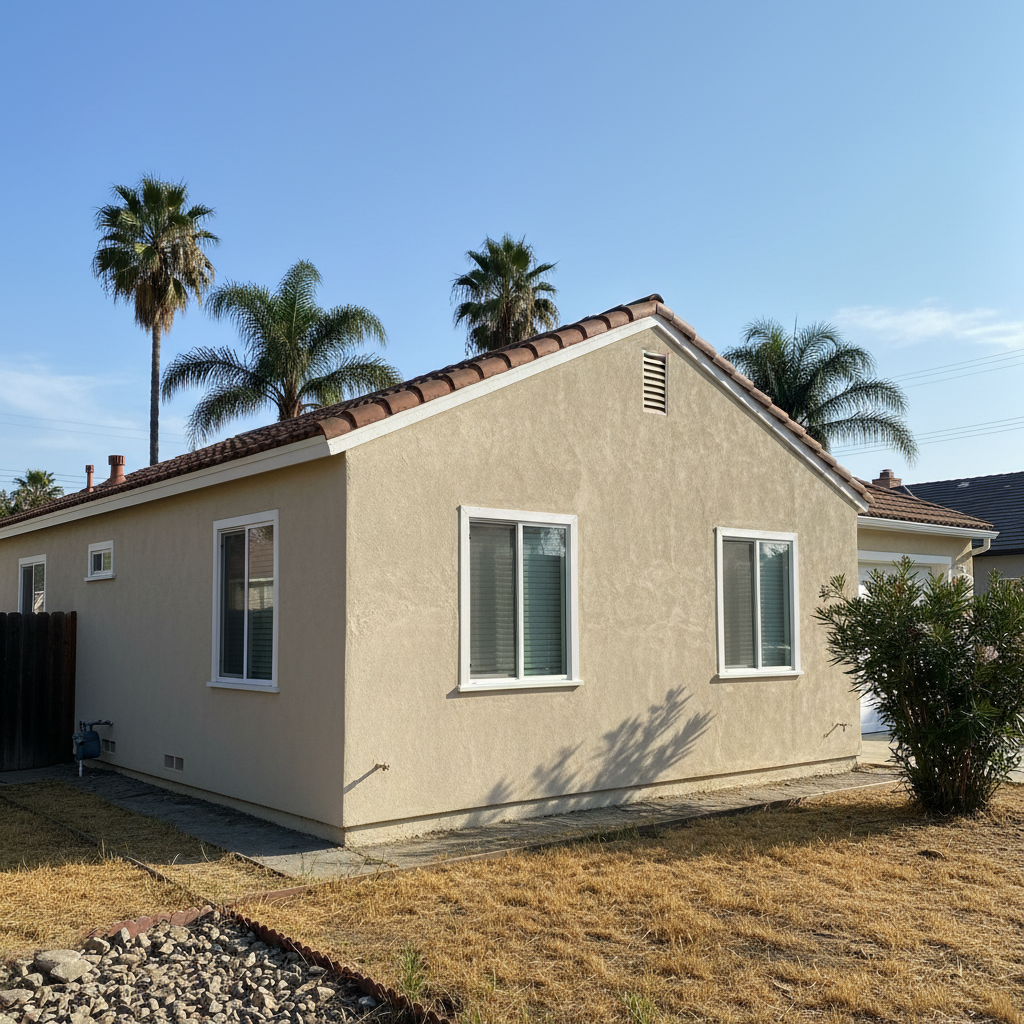
Okay, let's talk about EIFS – that's Exterior Insulation and Finish Systems. You're probably thinking about it because it's so energy efficient, or maybe how tough it is, or even just the clean, modern look it gives a building. But before you get too deep into planning, you're probably asking the big question: what's this actually going to cost me?
Honestly, there's no simple, one-size-fits-all answer, especially here in Arcadia. We've got everything from those classic ranch-style homes to brand-new commercial buildings. Still, I can give you some solid numbers and a clear path forward, so you won't be going into this completely blind.
What Makes EIFS Prices Go Up or Down?
A few key things really affect the price of an EIFS job. If you understand these, any quote you get will make a lot more sense.
- The System Itself: Different EIFS systems exist. A basic barrier EIFS usually costs less than a drainage EIFS, for example, which has a drainage plane behind the insulation. Drainage systems are often the better choice, especially in places like ours where we get a fair amount of rain, because they handle moisture so much better. You might see a difference of about $1-$2 per square foot just based on the system type.
- Square Footage: This one's pretty obvious, right? More wall means more money. But, interestingly, the price per square foot can actually drop a bit on bigger projects. That's because of economies of scale. A small patch job or just one wall will have a higher per-square-foot cost than doing an entire house.
- How Complex the Building Is: This is a huge factor. A simple, flat rectangular wall is a breeze to work on. But what if there are lots of corners, arches, tricky architectural details, multiple windows, doors, or walls that aren't all on the same plane? That means more labor, more cutting, more waste, and more specialized finishing work, and it all adds to the cost. Think about those fancy details on some of the older homes near Santa Anita Park – that kind of stuff is complex.
- Insulation Thickness: EIFS is fantastic for insulation. The thicker the insulation board (that's EPS foam), the better the R-value and the more energy you'll save. But, of course, thicker material costs more. While 1 inch is often standard, you can definitely go thicker.
- Condition of the Existing Surface: If we're putting EIFS over old stucco or sheathing that's seen better days, we might need to do some prep work first. Things like cleaning, patching, or even minor repairs. All that happens before we can even start applying the EIFS, adding time and materials.
- Accessibility: Is it a single-story home with easy access all around? Or a multi-story commercial building that needs tons of scaffolding, lifts, or special safety gear? The harder it is to reach the work area, the more expensive it gets. That's due to labor and equipment rental, you know?
- Finish Type: EIFS comes in a huge variety of colors and textures. A standard smooth or sand finish is pretty straightforward. But if you want a custom color, a specialized texture (like one that looks like brick or stone), or a multi-color design, expect higher material and labor costs.
Typical Cost Ranges for EIFS in Arcadia
Alright, let's talk some actual numbers. For a typical residential EIFS installation here in Arcadia, you're probably looking at anywhere from $9 to $15 per square foot. For commercial projects, which often have bigger, simpler wall planes but might need stricter fire ratings or special systems, it could be anywhere from $10 to $18 per square foot.
Let's break that down. Imagine a hypothetical 2,000 square foot home with, say, 1,500 square feet of exterior wall space needing EIFS. You'd be looking at a project cost somewhere between $13,500 and $22,500. A smaller, more complicated job on a 500 sq ft section of a commercial building, though, might push towards the higher end of that per-square-foot range. It could even go beyond it if there are really tough access issues or super intricate designs.
Just remember, these are general ranges. Your specific project will land somewhere within them, or maybe even slightly outside, depending on all those factors I just mentioned.
What Should Be in Your EIFS Quote?
When you get a quote from Genesis Stucco Company, or any other reputable contractor, it should be quite detailed. Here's what you should expect to see:
- System Type: It should clearly state whether it's a barrier EIFS, drainage EIFS, or another specific system.
- Materials Breakdown: This covers the insulation board (what kind and how thick), the base coat, reinforcing mesh (type and weight), primer, and the finish coat (type, texture, and color).
- Labor Costs: The cost for getting the surface ready, putting in the insulation, applying the base coat, mesh, and the final finish.
- Scaffolding/Access Equipment: Any costs tied to setting up and taking down scaffolding, lifts, or other gear needed to safely reach all the work areas.
- Surface Preparation: Details on what's included for cleaning, patching, or priming the existing surface.
- Flashing and Sealants: These are super important for managing moisture, especially around windows, doors, and any penetrations. They should definitely be spelled out.
- Waste Removal: What happens to all the old material and construction debris? Make sure disposal is covered.
- Permits: Here in Arcadia, you'll probably need a permit for any big exterior work. Your contractor should handle this, and the cost should either be included or clearly listed as its own line item.
- Warranty Information: Details about the warranty for both the materials and the labor.
If a quote just gives you one big lump sum, ask for a breakdown. You really need to know what you're paying for, don't you?
How to Avoid Overpaying for EIFS
Nobody wants to get ripped off. Here's how you can protect your wallet:
- Get Multiple Bids: This is probably the most crucial step. Get at least three detailed quotes from different, reputable EIFS contractors. This helps you compare apples to apples and understand the going rate for your specific project.
- Check References and Licenses: Don't just take their word for it. Call past clients, look up their contractor's license with the CSLB (Contractors State License Board), and check out online reviews. A good contractor will have absolutely nothing to hide.
- Understand the Scope: Make sure every bid you get covers the exact same work. If one bid is way lower, it might be because they've left out something important, like proper flashing or a drainage system.
- Ask About Experience: EIFS installation is a specialized skill. You want someone who has a proven track record specifically with EIFS, not just general stucco work. Ask to see examples of their EIFS projects.
- Don't Automatically Go for the Lowest Bid: While comparing prices is smart, the cheapest option isn't always the best. A super low bid can be a big red flag for cutting corners, using cheaper materials, or not having proper insurance. You're investing in your property; quality really does matter.
- Look for Local Expertise: A contractor who knows Arcadia understands the local building codes, our weather patterns, and even common issues in the area. For example, the clay soil we have in some parts of Arcadia can cause foundations to shift, meaning your exterior system needs to handle a little movement without cracking. Local knowledge is truly invaluable.
EIFS can be a fantastic investment for your property, offering great looks and energy savings. Just make sure you do your homework, understand what you're paying for, and pick a contractor who really knows their stuff. If you have questions, don't hesitate to reach out to us at Genesis Stucco Company. We're always happy to chat about your project.